

How to create names for fantasy books?
Every author of fantasy books has gotten stuck when it was time to name the protagonist. You have the story in your head, the setting ready, the magic system mapped out, but when it comes to naming the hero, your mind goes blank. A character’s name carries the weight of your world: it hints at the culture, the sound and even the personality of whoever bears it.
In this post, I’ll show you in practice how to structure and create character names that sound authentic and memorable, without spending hours staring at the screen. And I’ll show you how I solved this problem in my own workflow with the Name Forge, one of the writing tools I developed in One Tools Pro.
1. The syllable shuffling technique
One of the most effective ways to create names for fantasy books is to take ordinary words, or names you already like, and mix up their syllables. Instead of inventing something entirely from scratch (which usually sounds artificial), you start from a sound base that already works.
With that in mind, I created the Syllable Shuffler. You add your base words to the cauldron, choose the length of the generated name (how many syllables) and the tool gives you dozens of combinations.
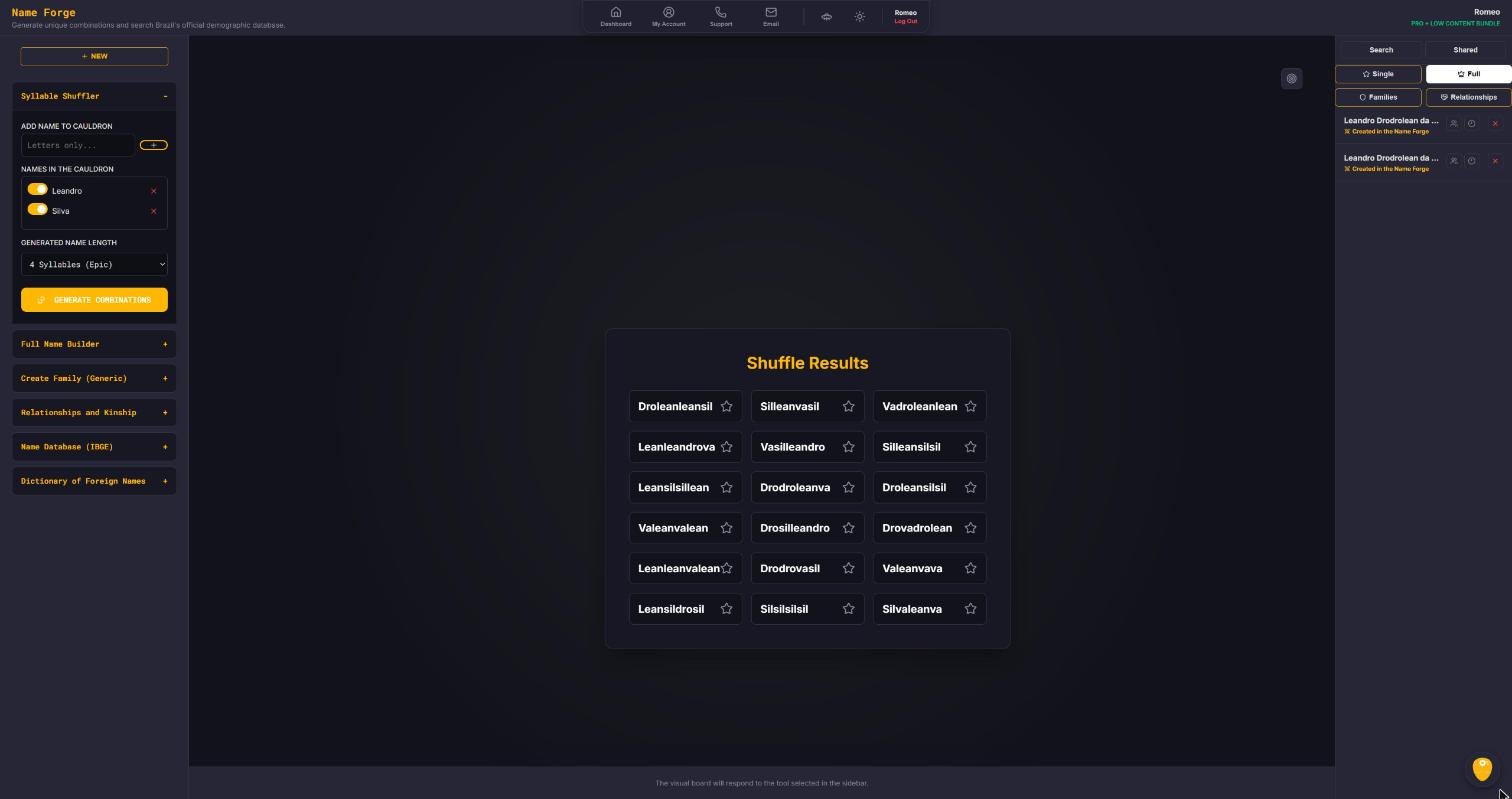
Notice that, with just two simple words, the combinations already look like they came out of a high fantasy saga. It’s a huge shortcut for your worldbuilding. Whatever you like, you save to use in the next steps.
2. Building the structure: the full name
In creative writing, a name rarely comes alone. A fantasy protagonist usually has a title, a weighty surname or an epithet. Once you’ve found the ideal base in the shuffler, it’s time to put together the full name.
In the Full Name Builder, you join the pieces like blocks: the name you just generated, a connector (such as “da”, “von” or “van”), free text, other saved names and the name of a family. You can change the order with the arrows until the combination sounds right.
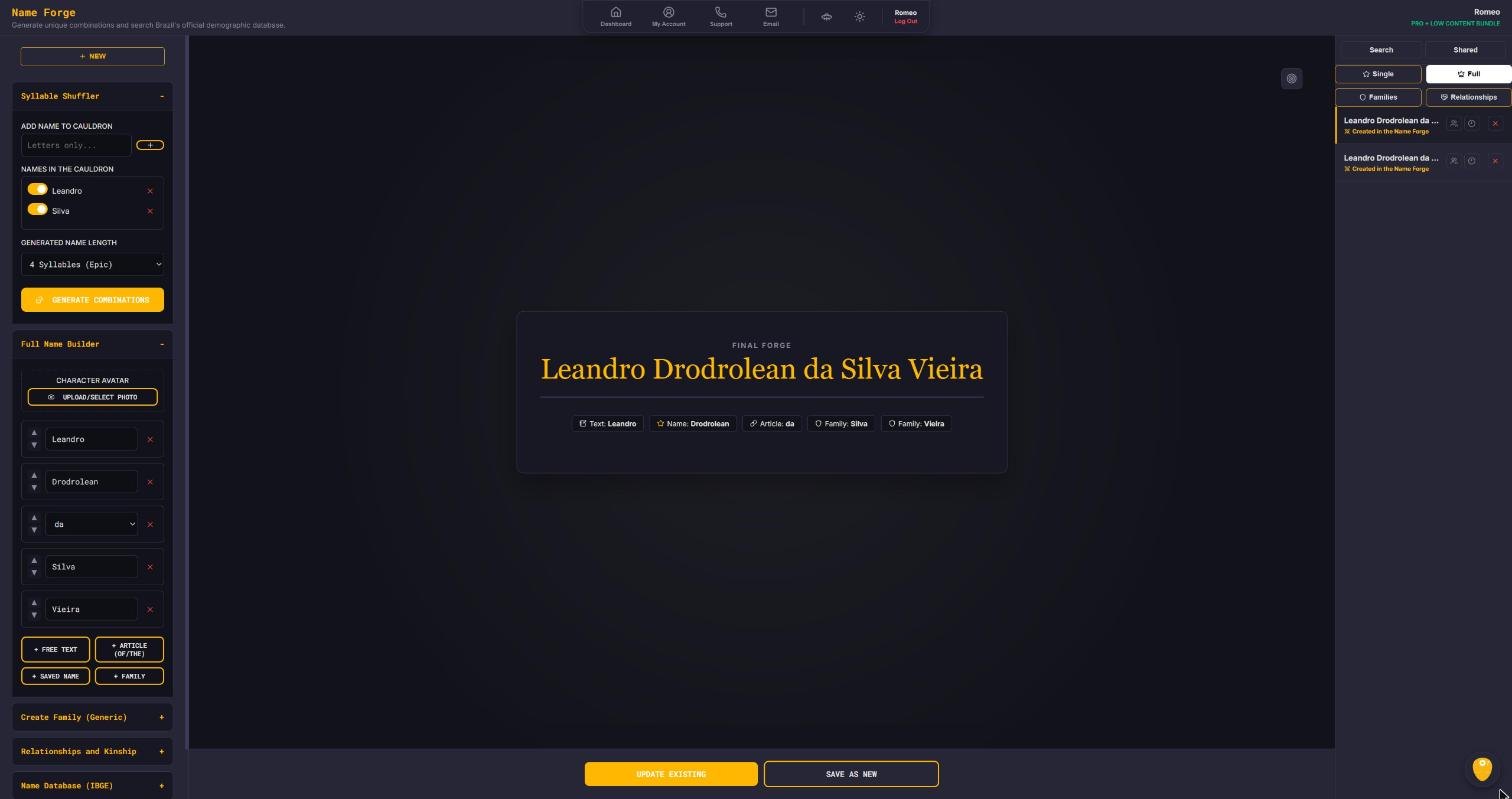
Seeing the name assembled helps you notice whether the final sound flows well before you take this hero into planning your story.
3. The weight of blood: creating houses and families
In fantasy universes, a character’s family or faction matters as much as the character. Think of the great epics: noble houses, clans, guilds. A name gains much more strength when it’s tied to a house.
That’s why the Name Forge has the Create Family module. There, you don’t just name the lineage: you also define the family’s motto, origin and history, and you can upload a crest.
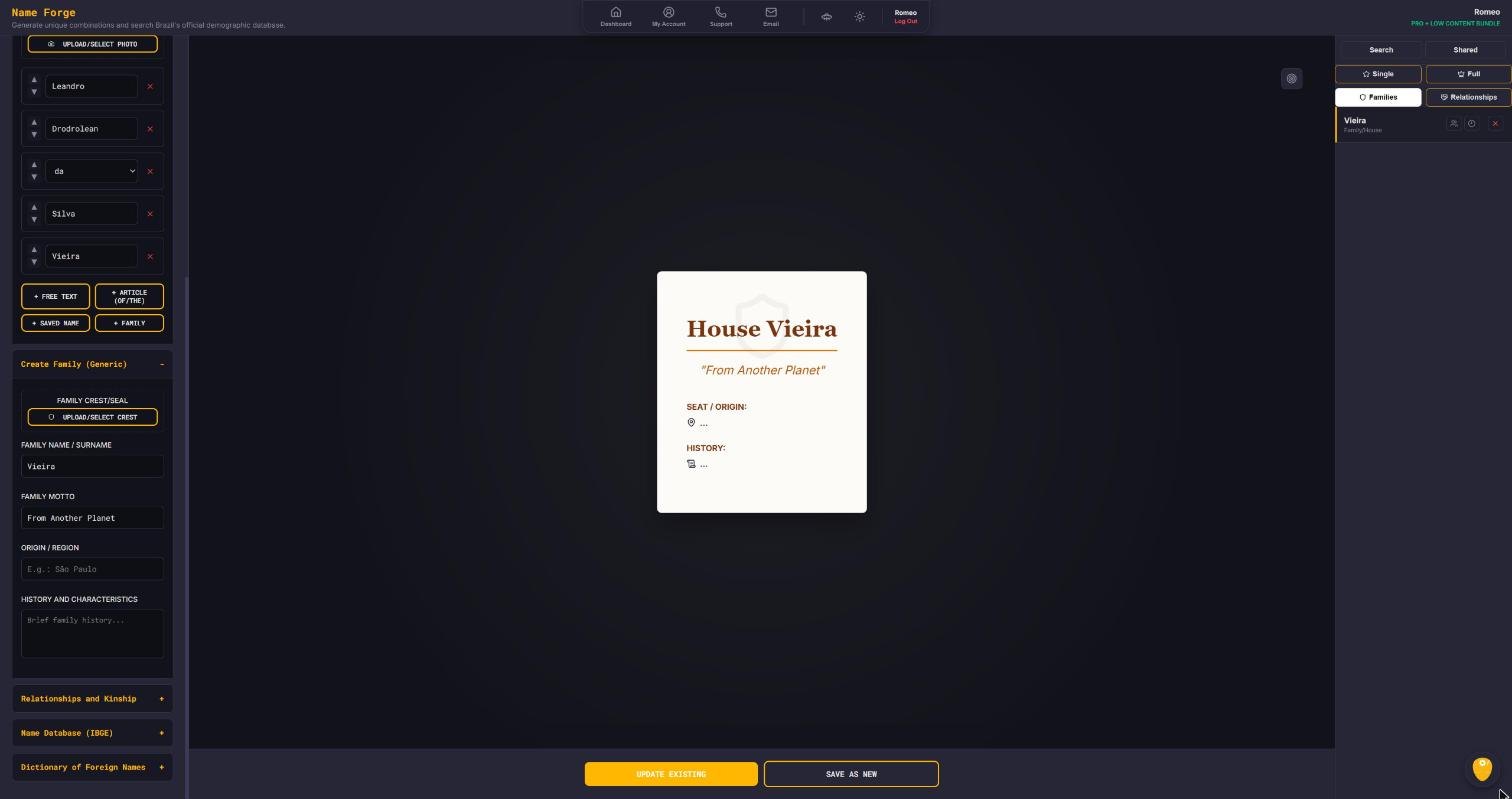
When you link the protagonist to this family (just use the Family block in the builder), your story puts down roots.
4. The web of connections: relationships and kinship
No character exists in a vacuum. If you’ve created a hero with an imposing name, they’ll interact with siblings, mentors, lovers and enemies.
So you don’t get lost in that web, the Relationships and Kinship feature links the characters you’ve created and defines who is what to whom. The links are saved and appear in the link explorer, a kind of family tree for the character.
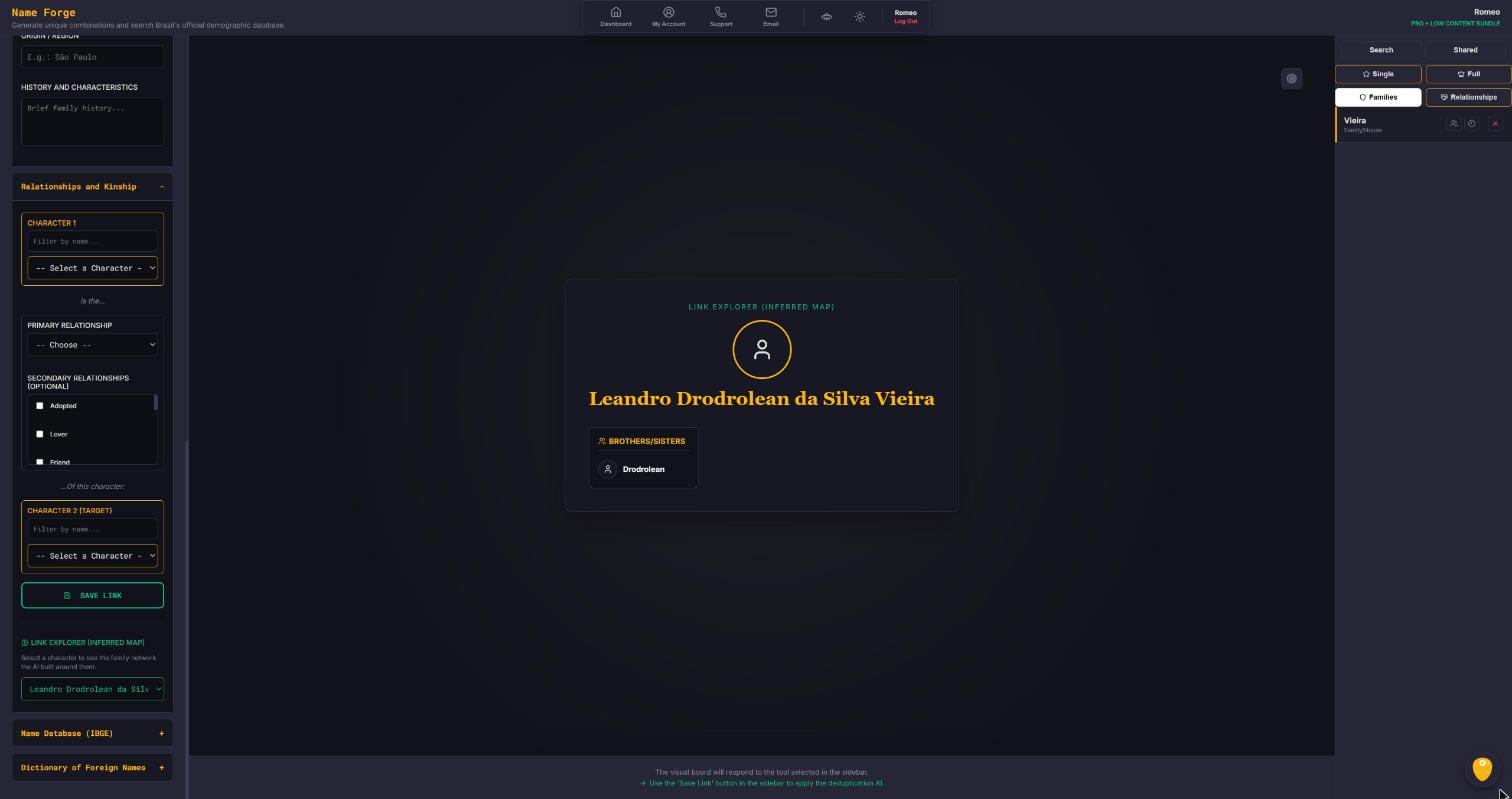
This step is important to keep the structure of the narrative consistent: when you’re writing, you know exactly who is whose sibling, without having to go back to your notes.
5. Drawing inspiration from the real world
Sometimes the best fantasy draws from reality. If your universe has a culture inspired by a region of our world, using real names as a base is the safest path.
Name Database (IBGE)
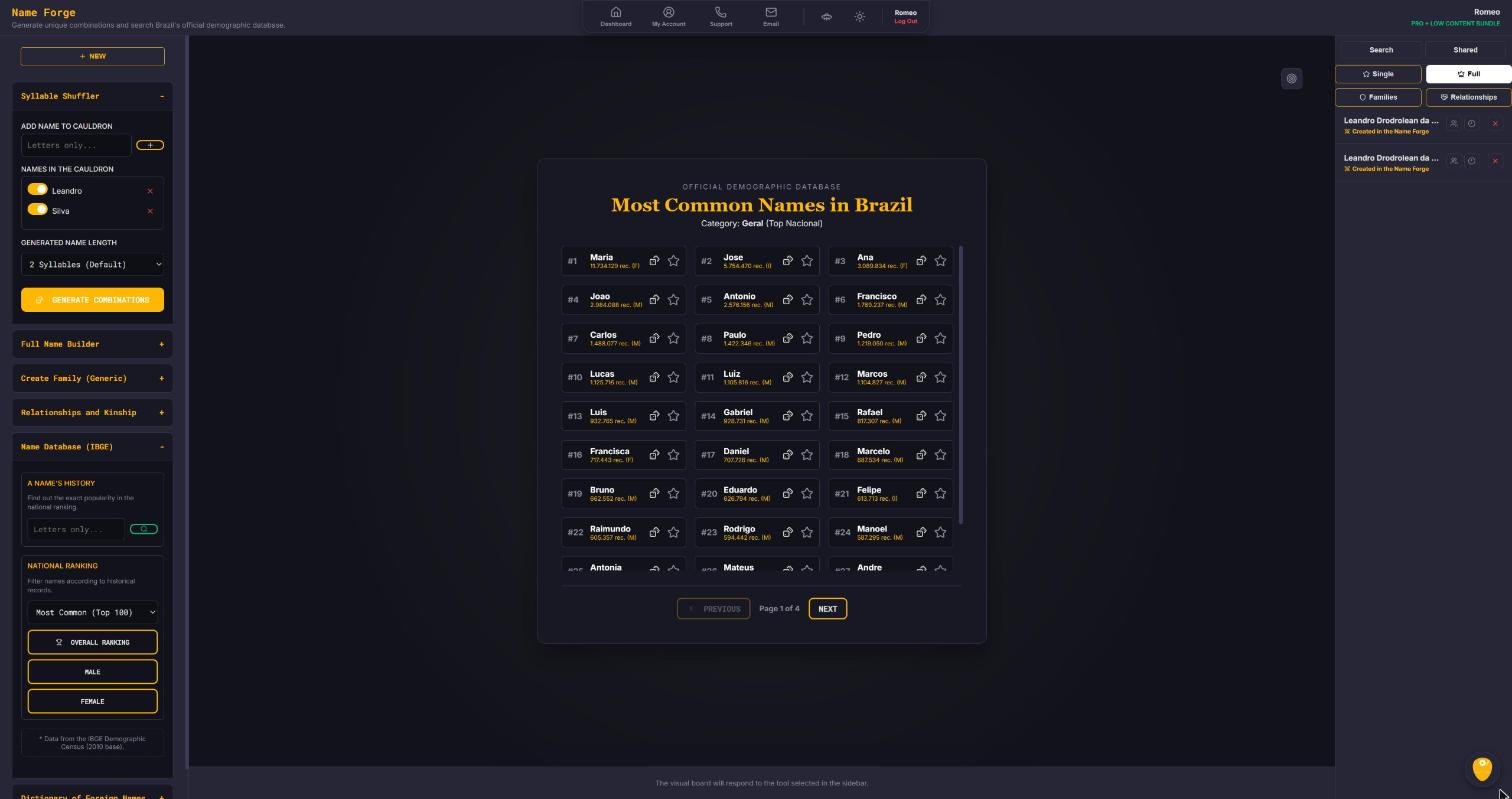
For stories set in Brazil or with Brazilian characters, whether urban, dystopian or contemporary fantasy, the tool includes the Name Database (IBGE), a Brazilian database built on data from Brazil’s 2010 Demographic Census. You can see the ranking of the most common names (overall, male and female) and search a name’s history to find out how popular it is in Brazil.
Dictionary of foreign names
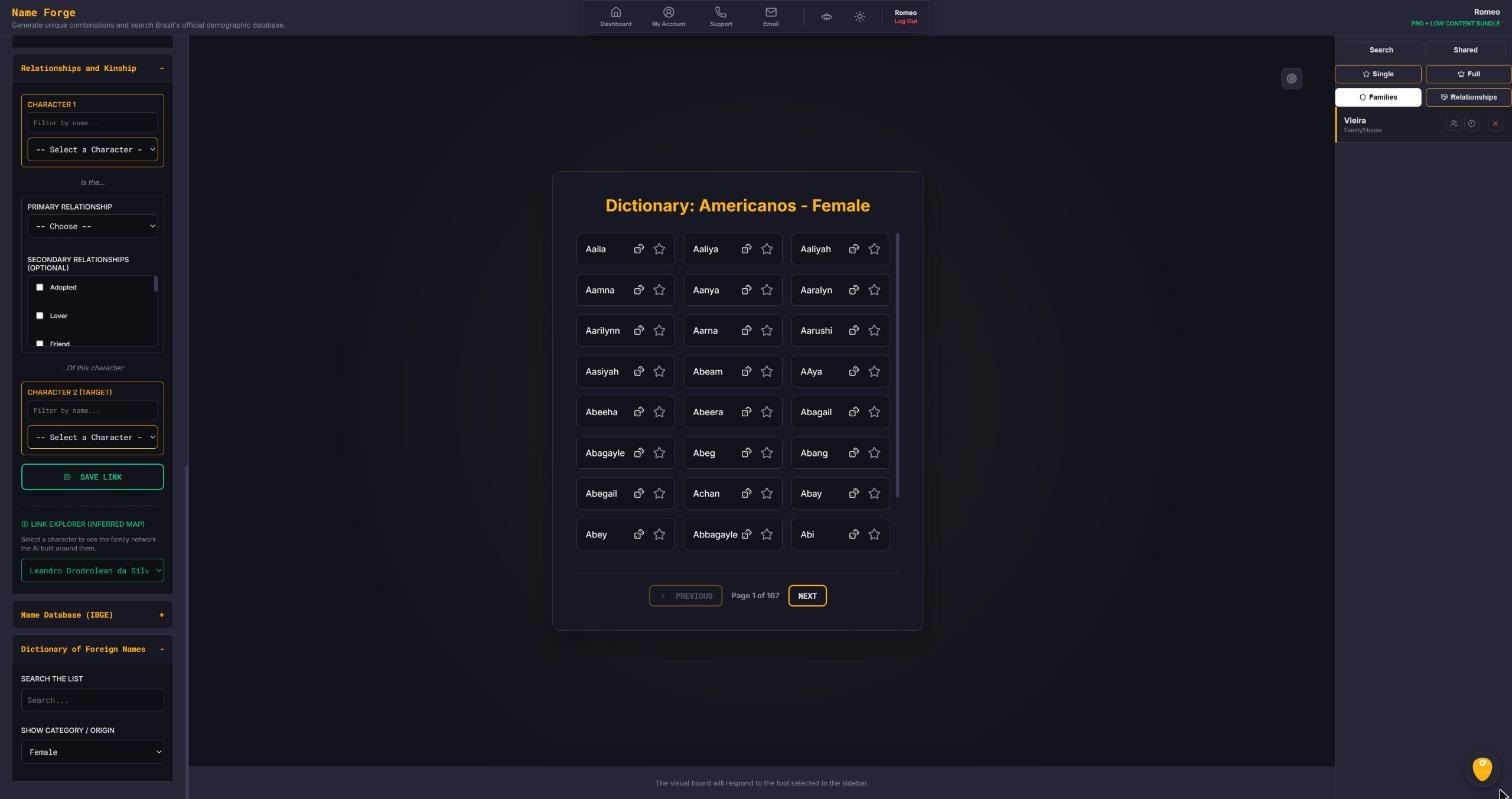
For classic medieval fantasy or settings in other countries, the Dictionary of Foreign Names offers extensive lists by origin and category (such as American female names, male names and surnames). It helps you find that name you might not have been able to invent on your own.
Tips for fantasy names that work
- One sound per culture. Different peoples in your world should sound different. Choose a set of syllables for each kingdom or race and use the shuffler with those bases.
- Different initials for the main characters. Important characters with the same initial or the same length confuse the reader.
- Read it out loud. If you stumble when saying the name, the reader will stumble too.
- Research before you settle. Search the name on Google to make sure it isn’t a famous character, a brand or an odd word in another language.
- Nicknames help. A long, solemn name can have a short version for dialogue.
Sometimes the block is with the whole plot. I have an article on how to avoid creative block and another on how to structure a story, with the narrative structure models I use.
Frequently asked questions
Is it better to invent a name from scratch or start from real names?
Starting from a base usually gives more natural results. Names invented from scratch, letter by letter, tend to sound artificial. Mixing syllables from real words, or adapting names from a culture that inspires your world, keeps a sound the reader recognizes.
Does it work for creating RPG names?
Yes. The process is the same for characters in books, tabletop RPGs or games: sound base, full name, family and relationships.
Where does the Name Database data come from?
From the 2010 Demographic Census by IBGE (the Brazilian Institute of Geography and Statistics), Brazil’s official name database. That’s why it’s most useful for stories set in Brazil or with Brazilian characters.
Tools and resources
About One Tools Pro: most of the platform's features are free, but some features require a subscription to be unlocked. To check, just visit One Tools Pro.
Creating names for fantasy books doesn't have to be torture in front of a blank page. With some organization and the right tools, you put your cast together quickly, and every name truly belongs to your universe. Keep fighting and always move forward!
Open the Name Forge in One Tools Pro